

Restoring Knee Stability: A Comprehensive Medical Guide to Cruciate Ligament Reconstruction

The knee joint represents one of the most mechanically complex and heavily burdened structures in the human body. Serving as a vital hinge between the femur and the tibia, it must simultaneously facilitate an extensive range of motion while bearing the entire weight of the body during dynamic activities. When the critical stabilizing structures within this joint fail, the resulting instability can profoundly diminish an individual’s physical capabilities and quality of life. Addressing severe ligamentous injuries requires highly specialized orthopedic expertise, state-of-the-art diagnostic imaging, and advanced surgical protocols. For patients facing profound joint instability, seeking comprehensive evaluation and restorative care at premier medical institutions like Liv Hospital is a crucial step toward regaining full functional mobility and returning to an active lifestyle.
The Anatomy and Biomechanics of the Central Ligaments
To fully grasp the severe implications of a knee injury, one must understand the intricate internal architecture that governs its stability. Deep within the center of the knee joint lie two robust bands of fibrous connective tissue known as the cruciate ligaments.
These two structures—the Anterior Cruciate Ligament (ACL) and the Posterior Cruciate Ligament (PCL)—cross each other to form an “X” shape, fundamentally controlling the back-and-forth motion of the knee. The ACL prevents the tibia (shinbone) from sliding out in front of the femur (thighbone) and provides essential rotational stability during pivoting movements. Conversely, the stronger and thicker PCL prevents the tibia from sliding backward. Because these ligaments are entirely intra-articular (inside the joint capsule), they are constantly bathed in synovial fluid, a biological environment that unfortunately inhibits their ability to heal naturally when completely torn.
Mechanisms of Injury and Clinical Presentation
Injuries to these vital stabilizers typically occur during high-demand physical activities, though the specific mechanisms differ between the two ligaments. The vast majority of ACL tears are non-contact injuries. They frequently transpire when an athlete rapidly decelerates, abruptly changes direction, or lands awkwardly from a jump, subjecting the knee to extreme rotational forces that exceed the ligament’s tensile strength. PCL injuries, on the other hand, usually require a direct, high-impact blow to the front of a bent knee, such as striking the dashboard during a motor vehicle collision or falling forcefully onto a hard surface with a flexed knee.
The acute clinical presentation of a severe tear is often highly dramatic. Patients frequently report hearing or feeling a distinct, audible “pop” at the exact moment of failure. This is rapidly followed by immediate, profound swelling within the joint capsule (hemarthrosis) and deep, throbbing pain. As the initial acute pain subsides in the ensuing days, the defining chronic symptom emerges: mechanical instability. Patients often describe a sensation of the knee “giving way” or buckling underneath them, particularly when attempting to pivot, descend stairs, or walk on uneven terrain.
Diagnostic Protocols and Surgical Intervention
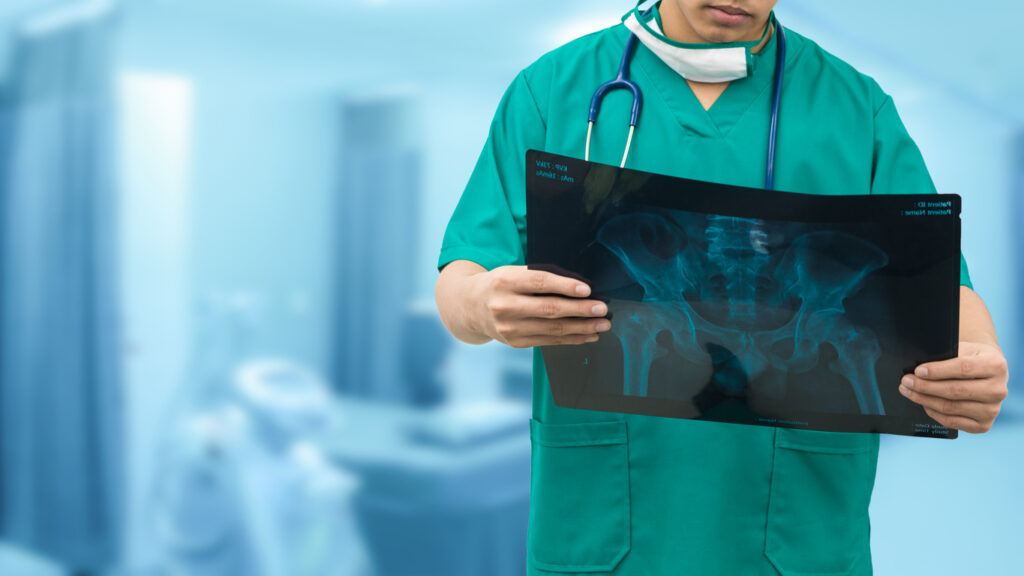
When acute instability indicates a potential rupture, orthopedic specialists utilize a combination of rigorous physical examinations and advanced radiological imaging. Specialized clinical tests, such as the Lachman test or the pivot-shift test, allow the physician to manually assess the exact degree of abnormal tibial translation. Magnetic Resonance Imaging (MRI) remains the gold standard for definitive diagnosis, providing high-resolution, multi-planar views that confirm the ligament tear while simultaneously identifying concurrent injuries to surrounding structures, such as the menisci or articular cartilage.
Because completely ruptured cruciate ligaments cannot reliably heal or be simply sutured back together, definitive medical management for active individuals generally necessitates Cruciate Surgery.
This sophisticated, minimally invasive procedure does not repair the torn ligament; rather, it entirely reconstructs it using a substitute tissue called a graft. Utilizing high-definition arthroscopic cameras and miniature surgical instruments, the orthopedic surgeon removes the remnants of the damaged ligament. Bone tunnels are then meticulously drilled into the femur and tibia at precise anatomical attachment points. The chosen graft—which can be harvested from the patient’s own patellar tendon, hamstring, or quadriceps (autograft), or sourced from a donor (allograft)—is threaded through these tunnels and securely fixed in place with specialized bioscrews or suspension buttons.
The Critical Role of Postoperative Rehabilitation
The surgical reconstruction of the ligament is only the first phase of the restorative journey; the ultimate success of the procedure relies heavily upon strict adherence to a comprehensive, multi-phased physical therapy program. In the immediate postoperative period, the primary clinical objectives are managing localized edema, restoring full knee extension, and re-establishing voluntary quadriceps muscle control.
As the newly implanted graft gradually integrates with the surrounding bone over several months, the rehabilitation protocol intensifies. Physical therapists introduce progressive resistance exercises to rebuild the atrophied musculature surrounding the joint, enhancing its active dynamic stability. Advanced phases of therapy focus intensely on proprioception, balance training, and sport-specific biomechanical retraining to ensure that patients can safely absorb impact and perform complex pivoting maneuvers without risking graft failure or contralateral injury.


